Thursday, 21 January 2021

Serving with the ATS in WW2

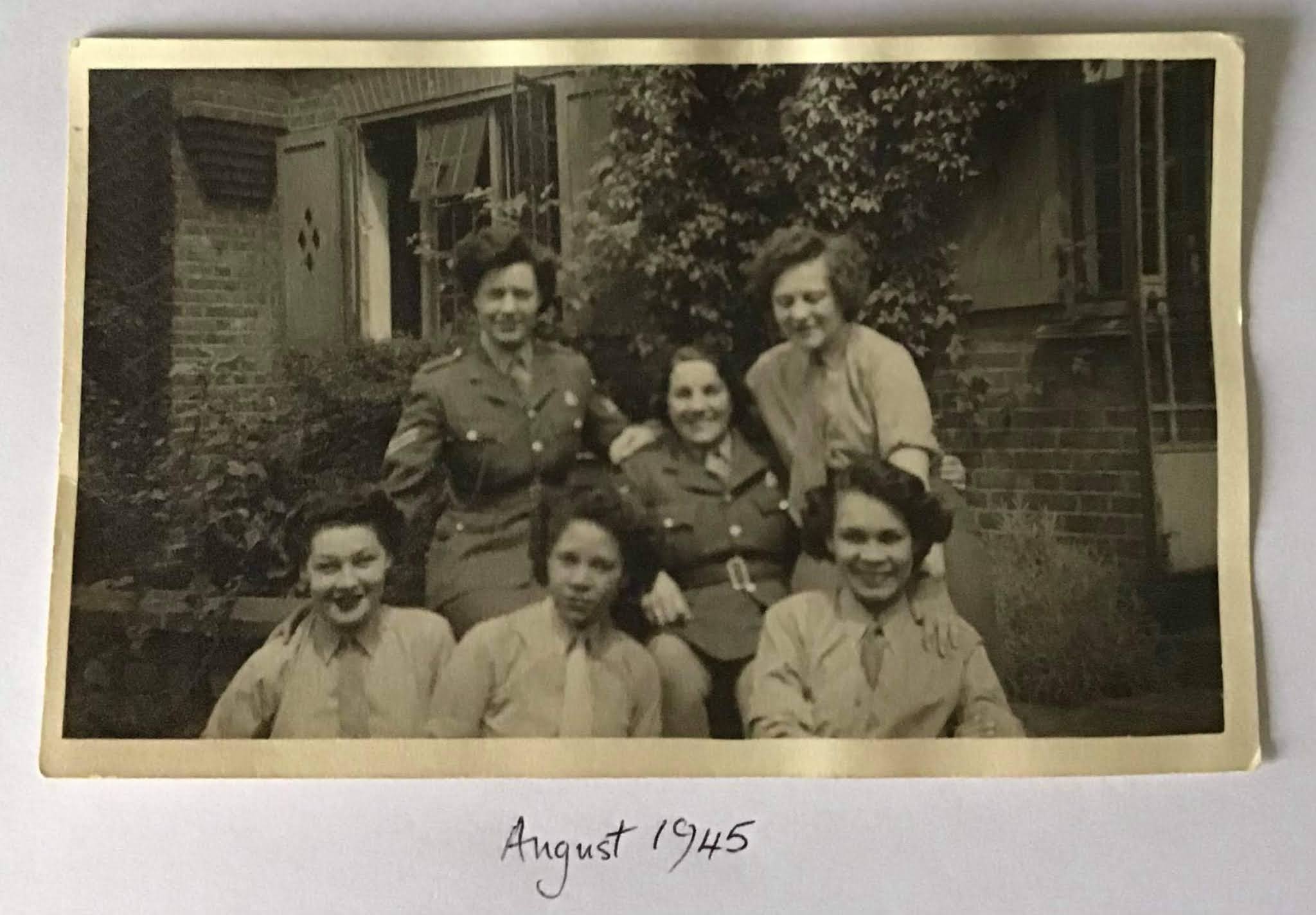
 This article features my cousin Eileen Ethel Maud Salmon, during World War Two at the age of 22 she signed up and joined the ATS in June 1942. She served as Corporal her role within this rank included clerical work and was based in London.


The Auxiliary Territorial Service, known as the ATS was the women's branch of the British Army during the Second World War. It was formed on 9 September 1938, it was originally set up as a women's voluntary service, until 1 February 1949, when it then merged into the Women’s Royal Army Corps.

The ATS had its roots in the Women’s Auxiliary Army Corps(WAAC), which was formed in 1917 as a voluntary service. The WAAC was disbanded after four years in 1921.


The ATS was granted full military status from April 1941. However, ATS women were still not allowed to undertake combat roles, but the duties of it’s members were expanded. Eventually there were over a hundred different roles in the ATS some of which now included orderlies, drivers, postal workers and ammunition inspectors.


it was decided to increase the size of the ATS, with numbers reaching 65,000 by September 1941. Women between the ages of 17 and 43 were allowed to join, although these rules were relaxed in order to allow WAAC veterans to join up to the age of 50. 


By 1943 the ATS represented 10 per cent of the Royal Corps of Signals having taken over the major part of the signal office and operating duties in the War Office and Home Commands, and ATS companies were sent to work on the lines of communications of active overseas theatres.

By VE Day and before demobilisation , there were over 190,000 members of the women's Auxiliary Territorial Service.


During serving for the ATS Eileen married Daniel Gilbert Adams known as Danny in 1943, but their marriage was short lived as he died whilst on duty. Danny was a flight sergeant in the RAF on the night of 25th April 1944 his aircraft exploded as a result of a night fighter attack over Germany. He died at the age of 27. His memorial is at CWGC Durnbach cemetery in Germany.

After the war in 1947 Eileen remarried and had a daughter Margaret who found me and if it wasn’t for her this post would have been impossible to write. I want to say thank you so much for reaching out and sharing wonderful memories and photos with me.


For further information regarding the ATS I have attached a short video from The National Army Museum. https://youtu.be/AXn0_uH1XIg


Sunday, 16 August 2020

My Great Grandad George

 Recently I made a discovery at home whilst sorting through stuff, something that I had never ever seen before. I have been trying for a while to find out some more information about my Great Grandad George Ives, and the role he played on the home front during World War Two.

On the 1939 register I saw around 4 years ago I discovered he volunteered for ARP duties whilst still working full time as a mason and paver by trade. Part time wardens were supposed to be on duty around 3 nights per week, but this increased greatly when bombing was at its heaviest. He was part of the decontamination squad and rescue services. The decontamination squad scraped up contaminated rubble from the streets whilst their colleagues followed behind them coating affected areas with bleach. The rescue service were responsible for finding and removing the dead and injured out from bombed out premises.


Other duties for ARP wardens included that the blackout was observed, sounded air raid sirens, safely guided people into public air raid shelters, issued and checked gas masks, evacuated areas around unexploded bombs. Arranged and located temporary accommodation for people who no longer had a place to call home and reported to their control centre incidents and fires.

 One in Six ARP volunteers was a woman, amongst the men there was a high percentage of veterans who fought during the First World War.


The local Air Raid Wardens kept a record of each incident, noting the date, the type of bomb and its location. Each Borough recorded its findings in its own way, the borough of Finsbury typed out a sheet every day reporting all the incidents that had happened in the previous 24 hours.


As I sat on my sofa I began to unwrap a small paper bag I found in a box, I was amazed and couldn’t believe my eyes it was my Great Grandads ARP leather wallet. As I opened it I was presented with his silver ARP badge. From the formation of the ARP until 1939, the badges were made of solid sterling silver, with a crescent shaped button hole attachment for men and a pin brooch style for women. From 1940 onwards the badges were made from base metal.


What’s more it contained his civil defence medal, a pink form from Finsbury Borough Council so he could order what he needed such as his uniform and equipment which he would need on duty. The form is dated 15th June 1944 he ticked boxes for the following: Helmet, Civil Defence respirator and haversack, anti-dim outfit, whistle, beret and coat.

However at the beginning of the war, ARP wardens had no uniform and wore their own clothes. Wardens wore helmets, arm bands and badges on their civilian clothes in October 1939 they were issued with ‘bluette’ overalls with a red on black ARP badge.


Also enclosed was his Civil Defence authority card which he carried inside this very wallet to show that he had authority to carry out his duty as warden, although it is stamped 1943 I know that he was a warden before this date. The original card may have been lost whilst on duty.

I then found a receipt for his Civil Defence Medal ribbon, the medal was issued at a later date.


I was very emotional that this had been kept by my Nanny Rose and I was now holding in my hands my Great Grandads wallet that he carried in his pocket 84 years ago. My great grandad volunteered for duty in 1936; as the Metropolitian Borough of Finsbury set up their ARP committee as early as 1935. This very wallet would have been with him the whole time and throughout the duration of WW2, whilst running into burning buildings trying to save people and salvage through the rubble in hope that there was still life out there to be saved. The sights he saw are unimaginable and I have heard stories of these events. One of that he found my Nanny Roses best friend at the time next to her mother with a baby in her arms all sadly lost to the tragedy of the War.


I am immensely proud of my Great Grandad and I can honestly say that my heart truly bursted with joy as well as sadness when I found his wallet.

Thank you for all you did God Bless Great Grandad George

Tuesday, 16 June 2020

Wedding & Leading Lady


The wedding photo is of my cousin Frederick G B C Whiter marrying Annie Allen in 1900 in Islington.
Freddie was an electrical engineer by trade he was born in Bethnal Green in 1876.
The young married couple emigrated to Canada in around 1904 with their daughter Irene.

Freddie and Annie went on to have another two children also girls, their names were Dorothy and Florence they were born in Canada.
Annie, Freddie’s wife died young at the age of 29 in 1910. I know that Florence the youngest daughter would have only been three when her mother died she was adopted, maybe her father couldn’t cope after losing his wife. Florence was now called Florence Williams (her adoptive name) she later married a man named Edward Waller in Toronto, Canada 1934; they had three children together. She went on to be a huge success and was the leading lady in the ‘Best Years’ theatre production in New York. I have attached a newspaper clipping of her. Her stage name was Billie, she passed away in 1980.


#MyFamilyHistory #wedding
#leadinglady 🖤